Demand Forecasting vs. Min-Max Model: Which Strategy Is Best for Inventory Management?

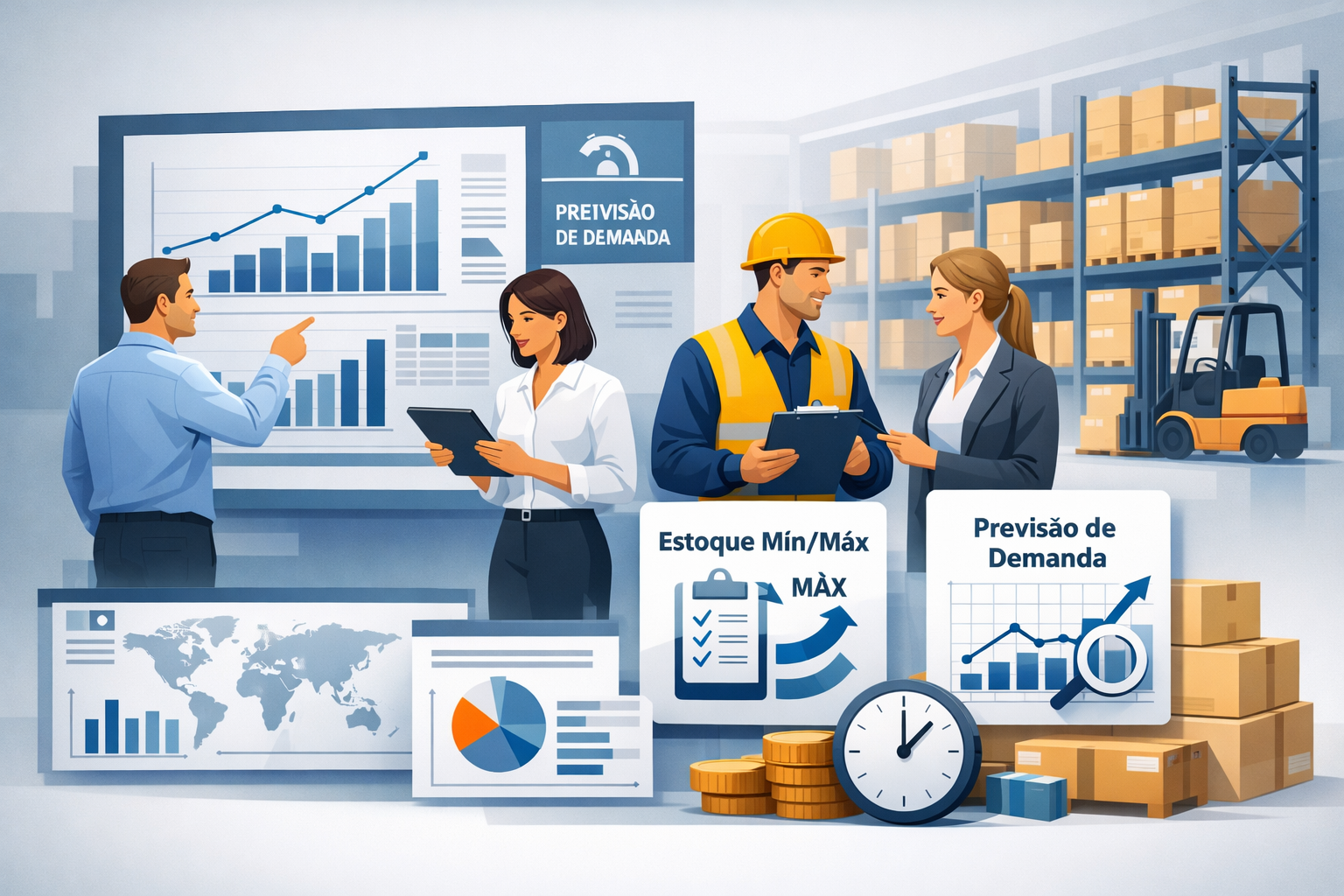
Managing inventory efficiently requires choosing the right strategy for replenishment and stock control. Two of the most common approaches are demand forecasting and the Min-Max model. Although both aim to prevent stockouts and reduce excess inventory, they operate in very different ways — and choosing the right one can significantly impact your results.
What Is Demand Forecasting?
Demand forecasting uses historical data, seasonality, trends, and business insights to estimate future demand. This method allows companies to anticipate consumption and plan purchases proactively.
Benefits of demand forecasting include:
- Better alignment between inventory and real demand
- Reduction of excess stock
- Improved purchasing planning
- Stronger support for strategic decision-making
What Is the Min-Max Model?
The Min-Max model is a simpler, rule-based method. You define a minimum stock level (the point at which you must reorder) and a maximum stock level (the target quantity after replenishment).
Advantages of the Min-Max model include:
- Easy implementation
- Clear rules for replenishment
- Works well for stable, predictable items
On the other hand, Min-Max does not consider seasonality, trends, or demand variations. It can lead to overstocking or stockouts when demand fluctuates.
Which Strategy Should You Choose?
There is no universal “best” strategy — the right choice depends on your business context.
- If your demand is stable and predictable, Min-Max may be sufficient.
- If your demand is variable, seasonal, or influenced by trends, forecasting delivers better results.
- Many companies benefit from a hybrid approach, using forecasting for strategic items and Min-Max for low-variability SKUs.
Conclusion
Demand forecasting and the Min-Max model are valuable tools for inventory management. Understanding their differences helps you choose the strategy that best fits your operational reality — and ultimately improves service level, reduces costs, and strengthens decision-making.